

Your Comprehensive Overview of Chiropractic Insights from Be Amazing Chiropractic
This aticle is presented here as an important step forward in how we think about spinal health and whole-body wellness. In this guide we break down the main claims tied to spinal health, show how those ideas relate to chiropractic care, and explain what that could mean for nerve function and daily wellbeing. Lots of people live with spinal problems that cause pain, stiffness or lower quality of life — the ideas in this post are aimed at helping practitioners and patients make smarter choices to address those issues. Below we’ll walk through what the document says, its relevance to nerve health, practical implications for your spine, how Be Amazing Chiropractic applies those insights, and what to expect from our $49 initial consultation.
What is Spinal Alignment And Why Does it Matter for Your Spinal Health?
Spinal alignment and general health go hand in hand. We stress the value of keeping the spine moving and aligned, and presents concepts practitioners can use when assessing and treating patients. Think of it as a practical reference for spotting mechanical issues that may influence nerve function and day-to-day comfort.
What are the key findings of spinal alignment related to chiropractic care?
The main takeaways from spinal alignment focus on how spinal position and movement can affect nerve signalling. The document suggests that certain misalignments may interfere with normal nerve communication and contribute to symptoms. Correcting those issues through targeted chiropractic care aims to reduce interference, improve nerve function and support better overall wellbeing. These ideas help clinicians design treatment plans that fit each person’s needs.
Current research complements this view — spinal dysfunction can influence nerve communication and, in turn, a person’s health and comfort.
Chiropractic & Nerve Interference: Spinal Health & Wellness
This chapter introduces chiropractic care as a practice that considers how a misaligned vertebra may affect nerve function and overall balance in the body. It outlines the types of symptoms often linked to spinal subluxations and explains the nervous system’s role in maintaining homeostasis.
Chiropractic: An Integrative Approach to the Evaluation and Treatment of Elite Athletes Utilizing Spinal Manipulation, 2022
How Does Spinal Alignment Impact Nerve Function and Wellness?
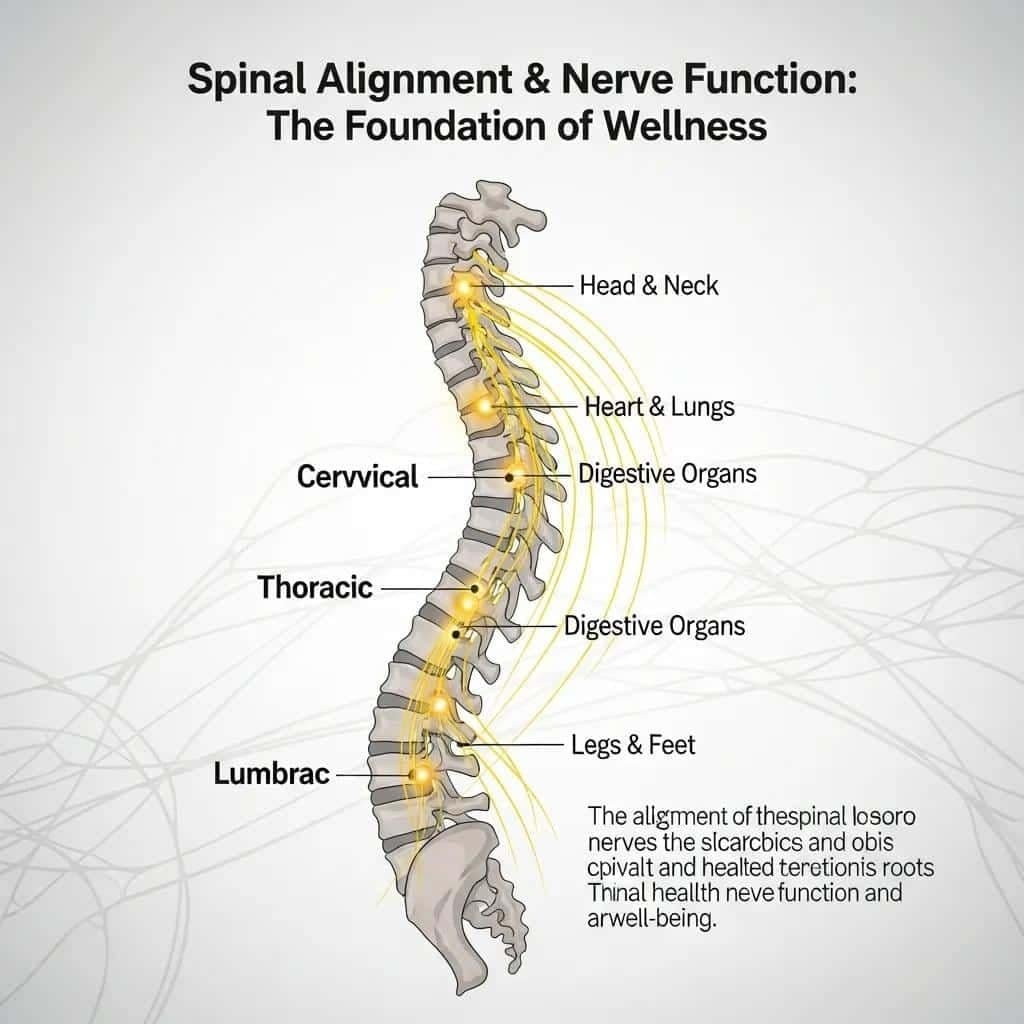
The image above outlines the connection between spinal mechanics and nerve signalling. It explains that when bones or soft tissues aren’t moving as they should, nerve signals can be disrupted — and that disruption can show up as pain, altered sensation or reduced movement. Recognising this link helps clinicians target treatments that support the nervous system and the body’s ability to recover.
How does spinal alignment explain nerve interference and its effects?
Nerve interference happens when spinal dysfunction disrupts the smooth flow of nerve impulses. This post this interference to symptoms such as pain, tingling, weakness or stiffness. By addressing the mechanical cause through precise adjustments and supportive therapies, chiropractors aim to restore clearer nerve signalling and ease those symptoms — improving function and quality of life.
What chiropractic techniques address nerve function based on Spinal Alignment?

Manual chiropractic adjustments are used to help nerve function — from spinal adjustments to guided exercises. Each technique targets alignment, mobility and muscular balance so the nervous system can operate more effectively. When combined into a personalised plan, these therapies support the body’s natural healing processes.
What Are the Spinal Health Implications of spinal alignment?
At Be Amazing Chiropractic, we advocate proactive care: regular checks, simple posture habits and early intervention to prevent long-term issues. Keeping the spine aligned and mobile is presented as a practical way to reduce wear, avoid persistent pain and maintain better function as you age.
How does spinal alignment relate to posture and alignment correction?
Be Amazing Chiropractic offers practical guidance on posture and alignment correction, underscoring regular chiropractic care as one effective tool. The report suggests that consistent adjustments, paired with posture-friendly habits and exercises, can help maintain spinal balance and reduce the chance of chronic discomfort. Small daily changes, supported by professional care, often lead to measurable improvements over time.
Clinical studies also show that ongoing, consistent chiropractic care can improve posture, walking patterns and overall wellbeing in many patients.
Chiropractic Improves Well-being, Pain, & Posture
In one report, after 35 chiropractic sessions a patient showed meaningful improvements in pain scores, physical and mental measures, gait stability, and postural alignment — illustrating how repeated care can support multiple aspects of function and quality of life.
Chiropractic care for low back pain, gait and posture in a patient with Parkinson’s disease: a case report and brief review, ECP Chu, 2021
How can chiropractic care prevent back pain?
Research suggests prevention starts with addressing root causes: joint stiffness, muscle imbalance and movement patterns that place extra stress on the spine. Regular adjustments, corrective exercises and patient education help reduce the risk of injury and the progression to chronic pain. When patients understand their role in recovery, long-term outcomes improve.
How Does Be Amazing Chiropractic Integrate These Insights into Patient Care?
At Be Amazing Chiropractic we weave the ideas from 30 years of practice and evidence base care into our everyday chiropractic care: careful assessment, targeted adjustments and ongoing support. Our goal is to give each patient a clear, tailored plan that addresses why a problem started and how to keep it from returning.
What is Dr. Adam Arnold’s expert perspective on spinal alignment?
Dr. Adam Arnold values spinal alignment as a useful framework for modern chiropractic care. He sees it as reinforcing the link between spinal mechanics and overall wellness and uses those principles to shape individual treatment plans. Dr. Arnold combines clinical experience with the document’s concepts to help patients reach realistic, lasting results.
How do Zone Technique and Quantum Neurology™ align with spinal alignment?
Zone Technique and Quantum Neurology™ are two approaches we use that match the practical goals in restoring balance, reducing interference and improving nervous system function. These methods focus on subtle corrections and functional balance, working alongside traditional adjustments to support recovery and resilience.
What Does the $49 Initial Consultation Offer Include?
Our $49 initial consultation gives new patients a thorough assessment. We review posture, spinal movement and basic nerve function, then discuss the findings and a personalised plan — so you leave with a clear path forward, whether that means a short course of care or small changes you can start straight away.
How can new patients benefit from the $49 assessment?
New patients benefit because the assessment digs into posture, alignment and how your body moves. That level of detail lets us tailor care precisely — so treatment focuses on the areas most likely to help, and you get a sensible plan that fits your lifestyle and goals.
How to book your $49 Initial consultation at Be Amazing Chiropractic?
Booking is easy. Call the clinic at
0434 812 819
and our friendly team will find a time that suits you. We’ll walk you through what to expect and make your first visit welcoming and straightforward.
Frequently Asked Questions
What types of patients can benefit from chiropractic care?
This approach can help a broad range of people — those with chronic back or neck pain, athletes recovering from injury, and anyone with posture-related issues. It can also aid people experiencing headaches, sciatica or stress-related muscle tension. The value lies in tailoring care to the individual’s specific problem and goals.
How often should one visit a chiropractor?
Visit frequency depends on your issue and goals. Often we recommend a short, focused series of visits to tackle acute problems, followed by occasional maintenance checks to keep things moving well. The document supports regular assessment so small problems don’t become big ones.
Can chiropractic care improve athletic performance?
Many professional athletes use chiropractic care to keep them performing at their best. When you have better spinal alignment and smoother nerve function can help athletes move more efficiently, recover faster and reduce injury risk. Chiropractic care used alongside training and rehab can support performance and resilience.
What lifestyle changes can complement chiropractic care?
Simple lifestyle steps make a big difference: good posture, regular movement, strength and mobility work, balanced nutrition and stress management like breathing exercises or gentle yoga. Combined with chiropractic treatment, these changes help sustain long-term improvements.
How does chiropractic address the role of patient education in chiropractic care?
Chiroprators highlight education as key for their patients: informed patients engage more with their care and make choices that support recovery. Understanding how posture, movement and daily habits affect spinal health empowers people to take practical steps between visits.
What are the long-term benefits of chiropractic care?
Over time, regular, targeted chiropractic care can improve spinal alignment, support clearer nerve function and reduce chronic pain. Many patients report better posture, greater mobility and fewer headaches. Committing to sensible ongoing care often leads to a noticeably higher quality of life.
What conditions does address that chiropractic care can help?
Chiropractic care covers a range of conditions commonly treated with chiropractic care — back and neck pain, headaches, and nerve-related complaints. By understanding these patterns, practitioners can make focused treatment plans that match the document’s findings and improve patient outcomes.
In particular, chiropractic approaches have shown promise for complex nerve-related conditions like peripheral neuropathy, helping to relieve pain and support function.
Chiropractic for Peripheral Neuropathy & Nerve Pain Relief
Peripheral neuropathy affects the peripheral nervous system — the network of nerves linking your brain and spinal cord to the rest of the body. For the many people who live with burning, numbness or tingling, daily activities can become a struggle. Emerging evidence suggests chiropractic care can play a role in reducing nerve pain, supporting the musculoskeletal system, and improving quality of life for some patients. This guide explores the clinical reasoning behind those approaches and examples of how clinicians apply them in practice.
Chiropractic Care Techniques for Peripheral Neuropathy
Is chiropractic care safe and effective based on findings?
C offers useful ideas for improving spinal health and supporting overall wellbeing. When those principles are combined with thoughtful chiropractic care, patients can see better nerve function, less pain and improved daily function. If you’d like to take a practical next step, our $49 initial consultation gives you a clear assessment and a personalised plan. Call us to book and let’s start restoring your comfort and movement.
Conclusion
Chiropractic offers useful ideas for improving spinal health and supporting overall wellbeing. When those principles are combined with thoughtful chiropractic care, patients can see better nerve function, less pain and improved daily function. If you’d like to take a practical next step, our $49 initial consultation gives you a clear assessment and a personalised plan. Call us to book and let’s start restoring your comfort and movement.